Spiti Valley
–
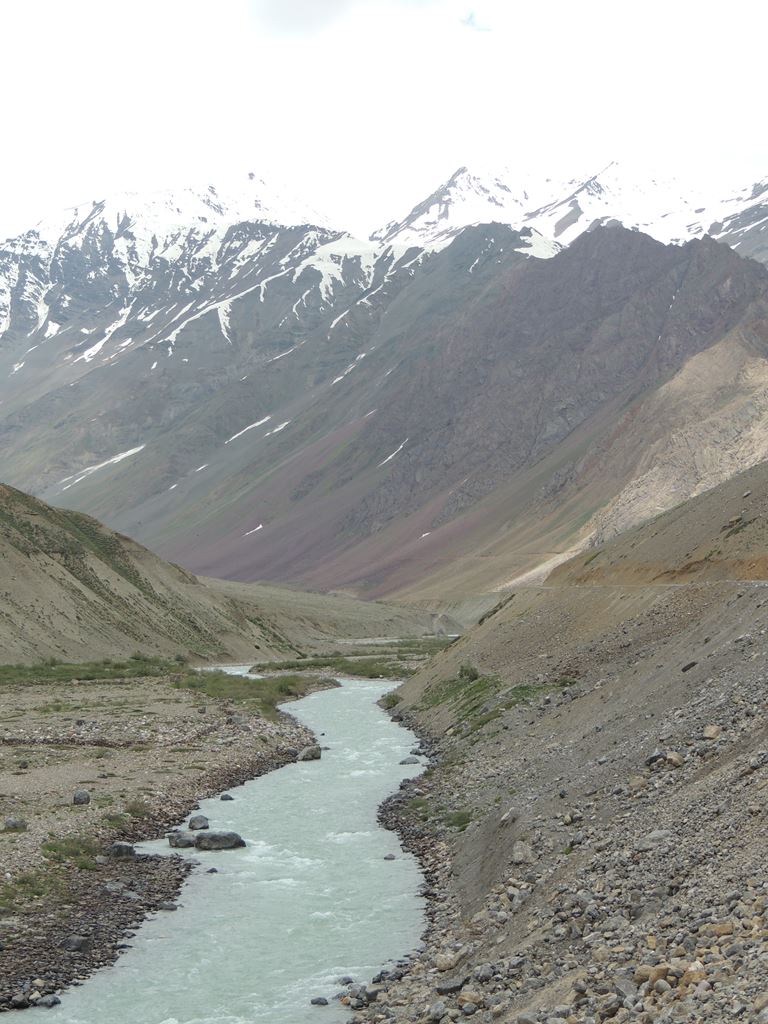
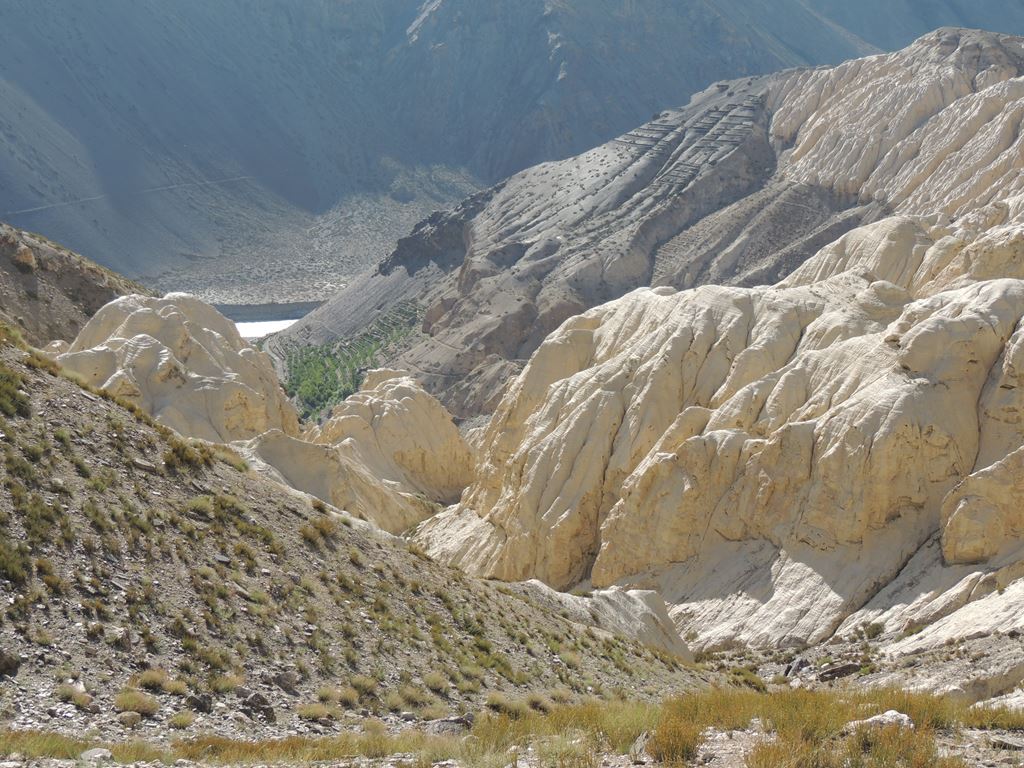
The Spiti Valley is a desert mountain valley located high in the Himalaya mountains in the north-eastern part of the Indian state of Himachal Pradesh. The name “Spiti” (locally pronounced Piti) means “The Middle Land”, i.e. the land between Tibet and India, has its sub-divisional headquarters at Kaza. The river Spiti originates at the base of the Kunzam range and flows eastward to join the Sutlej at Khab in Kinnaur. In practical isolation for centuries, Spiti has an intensely introvertive culture centered around its several monasteries- Dhankar, Ki, Tabo, Mud, Gungri, Lidang, Hikkim, Sangam, Mane Gogma and Giu to name a few. Spiti was loosely ruled for many centuries by a hereditary wazir, styled Nono. The majority of the people are Buddhists, followers of the Geluk-pa sect. The repetition of the mantra “Om mani Padme hum” (literally, ’Behold, the jewel is in the lotus’), is constant; it is believed to bring good fortune and wash away all sins. For all the seeming bleakness, Spiti possesses a haunting beauty. The wildlife in the region includes the elusive snow leopard and ibex, found in the Pin valley.
Wanderlust:-

Narkanda – Hatu Peak
Narkanda is a township in the district of Shimla that is the capital of Himachal Pradesh. It is located on the Hindustan-Tibet Road at an altitude of 2708 meters in Himachal Pradesh. There are lots of attractive places near Narkanda that will give your eyes an immense pleasure.
One of the most wonderful tourist spots, Hatu Peak is located in the ethereal Himachal Pradesh and is surrounded by Himalayan Ranges. This Peak is a big hit among tourists seeking tranquility and natural beauty. Hatu Peak is full of references to the mesmerizing sceneries and serene spots.
Wikipedia

Sarahan
Sarahan, a beautiful hamlet located in the Sutlej Valley, is a major tourist destination situated in the Shimla District of Himachal Pradesh. Placed at an average altitude of about 2165 m above sea level, the place is popular for its apple orchards, pine forests, small streams, rustic settings and slate roofed houses.

Kalpa – Reckong Peo
Kalpa is a small town in the Sutlej river valley, above Recong Peo in the Kinnaur district. Inhabited by Kinnauri people and famous for its apple orchards.
Reckong Peo, is headquarters of Kinnaur district. Reckong Peo is 260 kilometres (162 miles) from Shimla.

Tabo
Tabo is a small town in the Lahaul and Spiti district on the banks of the Spiti River in Himachal Pradesh, India. The town lies on the road between Rekong Peo and Kaza (alternative spelling: Kaja). The town surrounds a Buddhist monastery which, according to legend, is said to be over a thousand years old.

Nako
Nako is a village in the Himalayas of northern India, located near the Indo-China border in the Trans-Himalayan region of Kinnaur district in Himachal Pradesh.[1] Nako Lake is a prominent feature here where it borders the village. Nako Monastery, dated to 1025,[2] is located in the village as well as several other Buddhist chortens.

Dhankar
Dhankar (also Dankhar, Drangkhar or Dhangkar; Brang-mkhar or Grang-mkhar) is the village and also a Gompa, aBuddhist temple in the district of Lahaul and Spiti in India. It is situated at an elevation of 3,894 meters (12,774 feet) in the Spiti Valley above Dhankar Village, between the towns of Kaza and Tabo.

Kaza
The town of Kaza, Kaze or Kaja is the subdivisional headquarters of the remote Spiti Valley is a high altitude or cold desert having close similarities to the neighboring Tibet and Ladakh regions in terms of terrain, climate, and the Buddhist culture. Kaza, situated along the Spiti River river at an elevation of 3,650 meters (11,980 ft) above mean sea level, is the largest township and commercial center of the valley.

Key
Kye Gompa is a Tibetan Buddhist monastery located on top of a hill at an altitude of 4,166 metres (13,668 ft) above sea level, close to the Spiti River, in the Spiti Valley of Himachal Pradesh.
Kibber
Kibber is a village high in the Spiti Valley in the Himalayas at 4270 meters or 14,200 ft in Himachal Pradesh in northern India. It contains a monastery and the Kibber Wildlife Sanctuary. Kibber lies in a narrow valley on the summit of a limestone rock. Agriculture forms the backbone of the local economy and lush green fields are abundant. Villagers count on the 3-day traditional trade route over Parang La toLadakh to barter their horses for yaks or to sell for cash.

Hikkim
Hikkim is a village near to the Kaza location. It is one of the highest year-round inhabited locations in India. The region remains cut off from other regions for half the year due to heavy snow fall over the passes. People use stones extensively to build houses and structures. Tangyud gompa Monastery is located near to this location. This location is credited as World’s highest polling station and World’s highest post office.

Komic
Komic, situated at an elevation of 4513 meters is one of the highest villages in Asia and literally, means the eye of a snow cock. This quaint little farming village houses a population of 84 in 13 households. One of the world’s highest monasteries (4513 meters), called “Komic Lundup Chhemo” is situated in this village and belongs to the Sakyapa sect of Tibetan Buddhism.
Tentative Itinerary
Itinerary
- Day 1: – Departure from Ahmedabad by train.
- Day 2: – Arrival at Delhi, departure for Shimla / Mashobra.
- Day 3: – Kufri – Narkanda – Hatu – Night Sarahan.
- Day 4: – Saharan – Sangla – Rakchham – Chitkul Night Sangla / Rakchham / Chitkul.
- Day 5: – Kamru – Rogi – Kinnar Kailash view – Night Kalpa.
- Day 6: – Kalpa – Moorang – Pooh – Khab (Satluj Spiti Sangam) – Nako Lake, Gyu Mummy – Night Tabo.
- Day 7: – Tabo -Dhankar – Dhankar Lake – Lalung Serkang Monastery – Pin valley – Night Mud.
- Day 8: – Demul, Komic ( world’s highest motorable village ) – Hikkim ( world’s highest post office ) – Langza fossil park – Chochogang Nilda panorama view – Night Kaza.
- Day 9: – Kee Monastery – Kibber – Gyate – Kee monastery top view – Tashigang – Night Kaza.
- Day 10: – Losar – Kunzum La – Night ChandraTal
- Day 11: – Batal – Chattru – Gramfu – Rohtang La – Night Manali
- Day 12: – Local sightseeing and relax day in Manali
- Day 13: – Departure for Delhi by Bus in evening, Night on the bus.
- Day 14: – Arrival at Delhi in evening, Departure for Ahmedabad in the evening by train.
- Day 15:- Arraival at Ahmedabad in the morning.
Batch Size
- 12 to 20
Batch Dates
- 27th May – 10th June